Air Quality Expert Offers Guidance on Reducing Health Risks from Outdoor Pollution
08/12/2026 / By Iva Greene
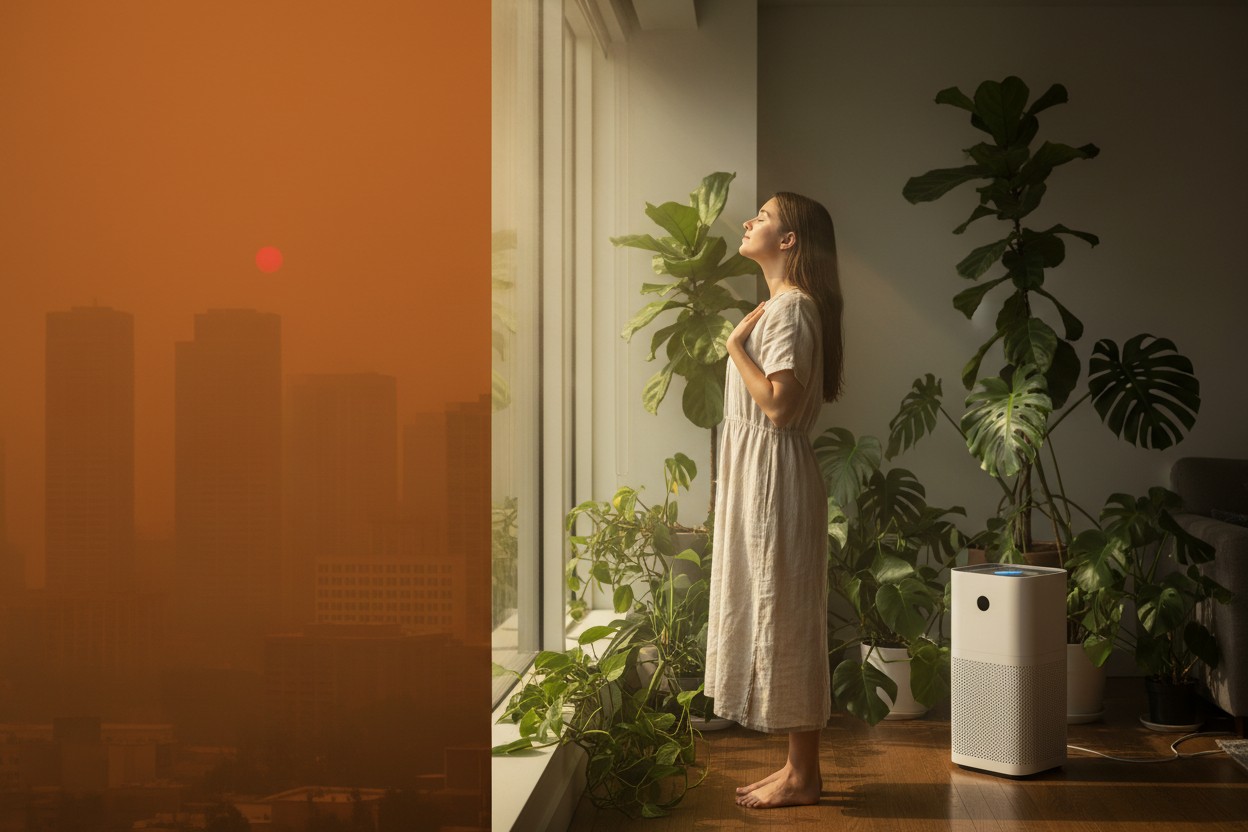
Michael Rubino, a mold and air quality expert and founder of HomeCleanse, has published guidance urging people to monitor outdoor air pollution and take steps to reduce associated health risks. The guidance, released August 11, 2026, recommends checking air quality readings daily and taking protective measures indoors when pollution levels are elevated.
The guidance follows a summer in which wildfire smoke triggered air quality alerts across roughly a dozen U.S. states and left Detroit, Minneapolis, and Chicago with some of the worst air quality in the world on July 16, according to published reports [9][10].
Daily Air Quality Checks Advised
The average person breathes about 2,000 gallons of air per day, nearly enough to fill a swimming pool, making air one of the largest routes of exposure to environmental contaminants, according to Rubino. He wrote that checking air quality should become part of the daily routine, alongside the customary look at the weather forecast.
Exposure to poor air quality can trigger a multi-systemic response, with effects spanning the entire body, according to Rubino. Respiratory distress, widespread inflammation, headaches, fatigue, and reduced cognitive function are among the possible short-term effects. Longer-term exposure can lead to cancer, heart disease, and neurological impairment, he wrote. Published reports have linked air pollution to the exacerbation of heart disease, lung disease, and stroke [1], and to cognitive decline in later years [2]. A World Health Organization report cited in 2016 coverage attributed one in four deaths globally to living and working in toxic environments, with air pollution the greatest contributor [3].
Rubino said most airborne hazards are microscopic, which makes monitoring necessary. “By monitoring our air quality, we can be better prepared to take action to reduce our exposure to contaminants and protect our bodies,” he wrote.
Seasonal Pollutants Include Wildfire Smoke and Mold
Wildfire smoke can contain chemicals including aldehydes, acid gases, sulfur dioxide, nitrogen oxides, carbon monoxide, and polycyclic aromatic hydrocarbons, according to Rubino. The seasonal risk was evident in July 2026, when smoke from hundreds of wildfires in the United States and Canada pushed Detroit, Minneapolis, and Chicago to the top of global rankings for worst air quality on July 16, according to The Epoch Times [9]. Alerts and warnings were in effect for around a dozen states on July 17 [10]. “At-risk populations should stay indoors and keep your windows closed to keep yourself safe,” Maryland Gov. Wes Moore said in a statement [10].
Humidity fluctuations are another seasonal factor, according to Rubino. Mold can grow at humidity levels of 60% and above, and outdoor humidity that raises indoor levels can allow microbial growth. Allergy references state that when indoor humidity rises above 50 percent, the risks of fungus growth rise steeply [5]. Storms can bring water damage, while ozone and higher particle levels from pollen and mold spores add to seasonal risks, Rubino wrote. Air quality risks fluctuate based on the time of year, the article stated.
Air Quality Index Measures Five Major Pollutants
The most common way to monitor local air quality is the Air Quality Index, according to Rubino. The index rates air on a scale from 0 to 500, using measurements of up to five criteria pollutants: carbon monoxide, ground-level ozone, nitrogen dioxide, particulate matter, and sulfur dioxide, according to the U.S. Environmental Protection Agency [6]. An AQI value of 100 generally corresponds to the short-term National Ambient Air Quality Standard for that pollutant, the level EPA has set to protect public health for a single day [7].
Rubino said readings under 50 are considered good, while anything over 300 is hazardous. During wildfires in California in September 2020, air pollution in some regions surpassed what the EPA considers hazardous, reaching AQI values of 300 or more, according to reports [4].
AQI data is available through weather apps, local news channels, and websites such as AirNow [8]. Rubino recommended checking the index every morning to plan protective actions for the day.
Indoor Precautions Recommended When Outdoor Air Is Poor
People spend about 90% of their time indoors, so indoor air quality matters year-round, Rubino said. Outdoor contamination does not stay outside; it can enter buildings and affect indoor environments, he said. Research on indoor and outdoor air relationships states that the indoor atmosphere is an extension of the outdoor atmosphere, and indoor air quality responds to changes in outdoor air quality [12].
When outdoor air quality is poor, Rubino recommends keeping windows and doors closed to minimize outdoor air infiltration, ensuring air purifiers are turned on, regularly checking and replacing air filters, and using the highest-rated MERV filters the HVAC unit can accommodate. He also advised avoiding candles and aerosols, setting the HVAC system to recirculate or fan mode while closing the intake on fresh air systems, and cleaning with botanical alternatives.
Allergy references recommend using central air conditioning with a HEPA filter attachment to help trap spores before they reach occupants [5]. Rubino said the goal is to reduce airborne contamination entering the home, eliminate outdoor contamination that does enter, and avoid activities that add contamination to indoor air. Nearly half of the U.S. population lives in areas with unhealthy levels of ozone or particle pollution, according to the American Lung Association’s State of the Air 2025 report, as cited in coverage of rising demand for air purifiers [11].
Indoor Air Monitors Detect Pollutants and Humidity
Indoor air quality monitors can detect particulate matter from wildfire smoke as well as volatile organic compounds, mold, and ozone, according to Rubino. The devices also measure humidity, which can signal conditions that allow mold and bacteria to develop. Rubino cited the HomeCleanse Guardian as one device available for this purpose.
Monitoring indoor air is especially important when outdoor air quality is poor, the article stated. By understanding conditions inside, occupants can take steps to improve air quality when levels shift in unhealthy ways, according to Rubino.
Conclusion: Air Quality Deserves Same Attention as Weather
Rubino said air quality, both indoor and outdoor, deserves the same attention as the daily weather forecast. The air people breathe influences every system in the body, and small actions to reduce exposure to air pollution can make a meaningful impact on overall well-being, he said.
The guidance advises checking air quality regularly in addition to weather. “Don’t just protect yourself from getting caught in the rain, make sure you also know what you may be breathing in throughout the day,” Rubino wrote.
References
- Mercola.com. “Air Pollution Can Trigger Cardiovascular Disease”. Mercola.com. November 09, 2016.
- Mercola.com. “Air Pollution Linked to Cognitive Decline in Later Years”. Mercola.com. July 03, 2014.
- Mercola.com. “1 in 4 Deaths Linked to Air Pollution”. Mercola.com. March 30, 2016.
- NaturalNews.com. “California Wildfires Are Causing Unprecedented Levels of Air Pollution”. NaturalNews.com. September 17, 2020.
- Amy L. Sutton. “Allergies Sourcebook: Basic Consumer Health Information About the Immune System and Allergic Disorders”.
- US Environmental Protection Agency. “America’s Children and the Environment”.
- US Environmental Protection Agency. “America’s Children and the Environment”.
- Shawn Konecni & Cory McClinton. “SOS GARDENING: Prepping Your Survival Garden for Disasters”.
- “Wildfire Smoke Prompts Air-Quality Warnings Across Northern US”. The Epoch Times. July 17, 2026.
- “Smoke From Wildfires Darkens Skies in Upper Midwest, Northeastern US”. The Epoch Times. July 17, 2026.
- “Breathe Easy: How Modern Air Purifiers Are Redefining Fresh Indoor Living”. NaturalNews.com. July 13, 2026.
- “Contribution of Cane Bagasse Used as a Fuel in the Sugar Industry to Changes in Outdoor and Indoor Air Quality in Middle Egypt”. Atmospheric Environment. 1991.
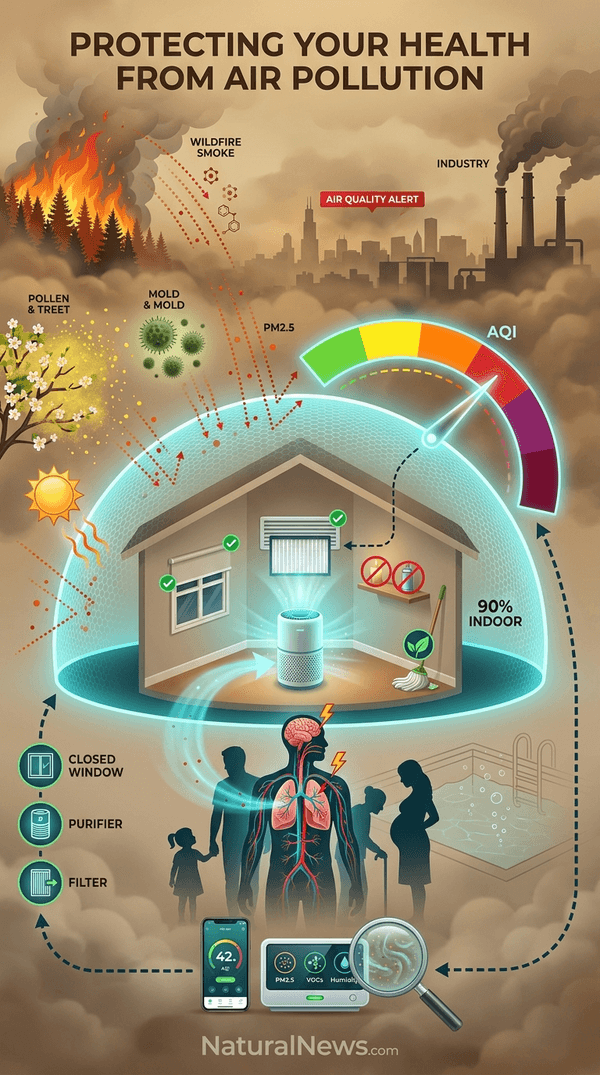
Explainer Infographic
Submit a correction >>
Tagged Under:
air, air quality, chemicals, health risk, humidity, indoor, lung health, natural health, outdoor air, pollutants, prevention, remedies, sensors, tips, toxins, volatile organic compounds, wildfires
This article may contain statements that reflect the opinion of the author
RECENT NEWS & ARTICLES